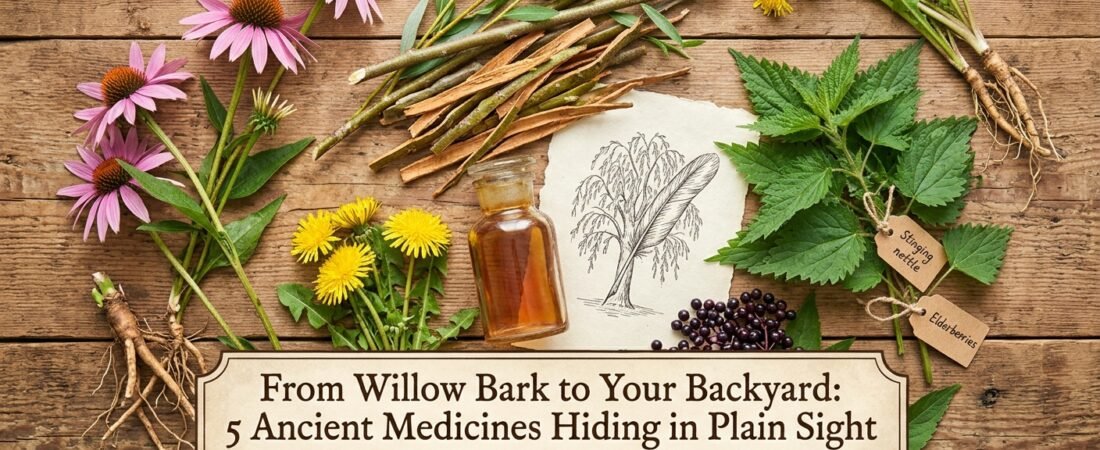
What if the most reliable items in your bathroom medicine cabinet aren’t modern chemical breakthroughs at all, but ancient survival technologies perfected over thousands of years?
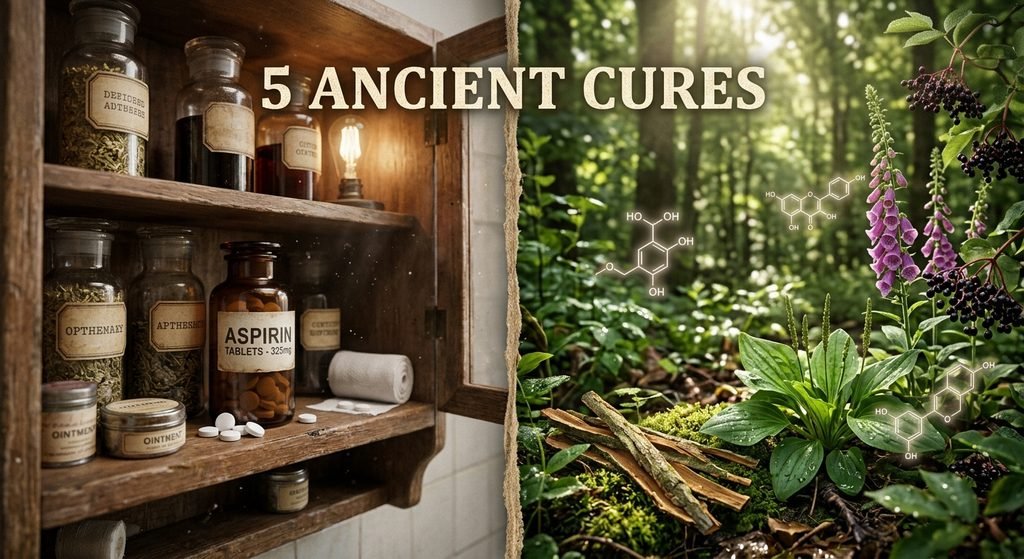
From everyday pain relievers to skin-soothing salves and cold remedies, nearly 40% of our modern pharmaceuticals derive directly from natural plant chemistry. Long before modern laboratories existed, traditional healers, First Nations communities, and early herbalists mapped out the exact botanical blueprints that keep us healthy today.
If you’ve ever wondered how humanity survived without corner pharmacies, the answer is growing right outside. Let’s explore 5 ancient plant medicines you still rely on in your home right now—and how you can take control of your health by growing them yourself.
1. Willow Bark & The Invention of Aspirin
- The Ancient Remedy: For over 4,000 years, ancient Sumerians carved willow bark pain remedies onto clay tablets, while the Egyptian Ebers Papyrus recorded willow infusions for severe joint inflammation. Indigenous North American First Nations like the Ojibwe and Cherokee brewed willow bark tea for centuries to ease fevers and bodily pain.
- The Science: Willow bark contains salicin, which human metabolism converts into salicylic acid. In 1897, this exact template inspired the creation of modern aspirin, which works by blocking pro-inflammatory enzymes.
- Modern Home Use: While we often reach for a foil blister pack of white aspirin tablets today, the plant compound remains a cornerstone of global healthcare.
2. Plantain Leaf: The Original Anti-Itch Ointment
- The Ancient Remedy: Known historically as “Waybread” in Anglo-Saxon England or “White Man’s Footprint” by Indigenous First Nations, roadside plantain leaves have been utilized for centuries to draw out venom and cool skin inflammation. Roman army surgeon Pedanius Dioscorides documented it extensively in De Materia Medica.
- The Science: Plantain leaf is packed with aucubin (a natural antimicrobial), cell-regenerating allantoin, and astringent tannins that create an osmotic draw to pull fluid and sting irritants out of swollen tissues.
- Modern Home Use: Whenever you experience a bug bite, minor burn, or skin scrape, plantain acts as nature’s original first-aid dressing.
3. Tea Tree Oil: Australia’s Ancient Antiseptic
- The Ancient Remedy: For over 40,000 years, Indigenous Australian communities (such as the Bundjalung people) crushed native Melaleuca paperbark leaves into healing mud packs and steeped them in lagoons to create antiseptic medicinal baths.
- The Science: Tea tree oil owes its potency to terpinen-4-ol, a powerful monoterpene that pierces fungal and bacterial cell membranes on contact without triggering the severe drying of harsh synthetic chemicals.
- Modern Home Use: It remains a staple in modern first-aid kits for treating minor cuts, blemishes, and fungal irritations.
4. Foxglove & Digoxin: Nature’s Heart Regulator
- The Ancient Remedy: In 1785, English physician Dr. William Withering formally isolated wild foxglove (Digitalis purpurea) from an old folk recipe used to treat dropsy and fluid retention.
- The Science: Foxglove contains digoxin, a potent cardiac glycoside that regulates cellular sodium-potassium pumps in heart tissue, increasing contraction strength while stabilizing chaotic pulse rates.
- Modern Home Use: Derivative compounds from foxglove remain vital clinical tools in modern cardiology for managing heart conditions.
5. Elderberry Syrup: The Indigenous Antiviral
- The Ancient Remedy: European folklore revered the Elder tree as Hylde-Moer (the Elder Mother), a sacred protector against winter illness, while Plains First Nations sun-dried black elderberries to build nutrient-dense winter reserves.
- The Science: Elderberries are rich in specialized lectins and anthocyanins that physically cap viral spikes, preventing influenza viruses from penetrating host cell walls and cutting cold durations significantly.
- Modern Home Use: It is one of the most popular immune-boosting syrups kept in kitchen cabinets during the winter cold and flu season.
Bring Ancient Healing Into Your Own Backyard
Understanding the history of your medicine cabinet reveals a profound truth: nature has already provided the remedies we need. But why rely solely on store-bought processing when you can cultivate your own chemical-free remedies at home?
If you want to take your wellness journey into your own hands—just like survivalist and herbalist Dr. Nicole Apelian did when she managed her health using backyard plants—you need the Medicinal Garden Kit.
🌱 Get Your Medicinal Garden Kit Here!
This comprehensive kit gives you everything you need to start your own home pharmacy:
- 10 Premium, Handpicked Medicinal Seed Varieties: Grow potent herbs like Chicory (nature’s joint-soother), Yarrow (the ultimate backyard wound healer), and more right outside your door.
- The Free Herbal Medicinal Guide: A detailed step-by-step handbook (From Seeds to Remedies) showing you exactly how to turn your harvested plants into professional-grade tinctures, salves, poultices, and essential oils—even if you’ve never made herbal medicine before!
Take control of your family’s everyday wellness, reduce your reliance on commercial aisles, and connect with thousands of years of botanical wisdom.
👉 Click here to secure your Medicinal Garden Kit today! Disclaimer: This article is for educational purposes only and does not constitute medical advice. Always consult with a qualified healthcare professional before treating medical conditions with herbal remedies.
Affiliate Disclosure: Some of the links included in this post, video description, or resource lists may be affiliate links. These small earnings directly support independent educational research, channel production, and our ongoing weekly deep-dives into ethnobotany and natural history. We only recommend brands, guides, and products that align with our commitment to traditional botanical heritage and holistic wellness. Thank you for supporting our roots!
Honor Your Roots
Whether it’s the remarkable discovery of chemotherapy agents in a wild Madagascar blossom or simple herbal teas enjoyed at home, plant chemistry continues to shape human health.
Which natural wellness traditions or herbal remedies do you incorporate into your daily life? Let us know in the comments below!